Confidential Working Presentation · 2026
Volumetric modular delivers a set of advantages that conventional construction cannot match at scale: programme certainty, programme speed, and a process built to repeat. Modules are built in a controlled factory environment while site preparation runs concurrently — compressing the critical path and removing the variability that comes with sequential on-site trades.
This proposal retains your design intent while introducing a controlled, repeatable delivery system — your designs, our process.
Keep delivers the whole house. Our modularisation process cuts the project at the roofline — a deliberate split that gives Stockland the certainty of factory-built modules below, and the full flexibility of any roof typology above.
Modules contain everything from the slab surface to the top plate. The roof is delivered as a prefab truss package — designed by Keep, supplied prefabricated, set on site after modules are installed. Both halves are Keep's scope, sequenced to compress the on-site programme.
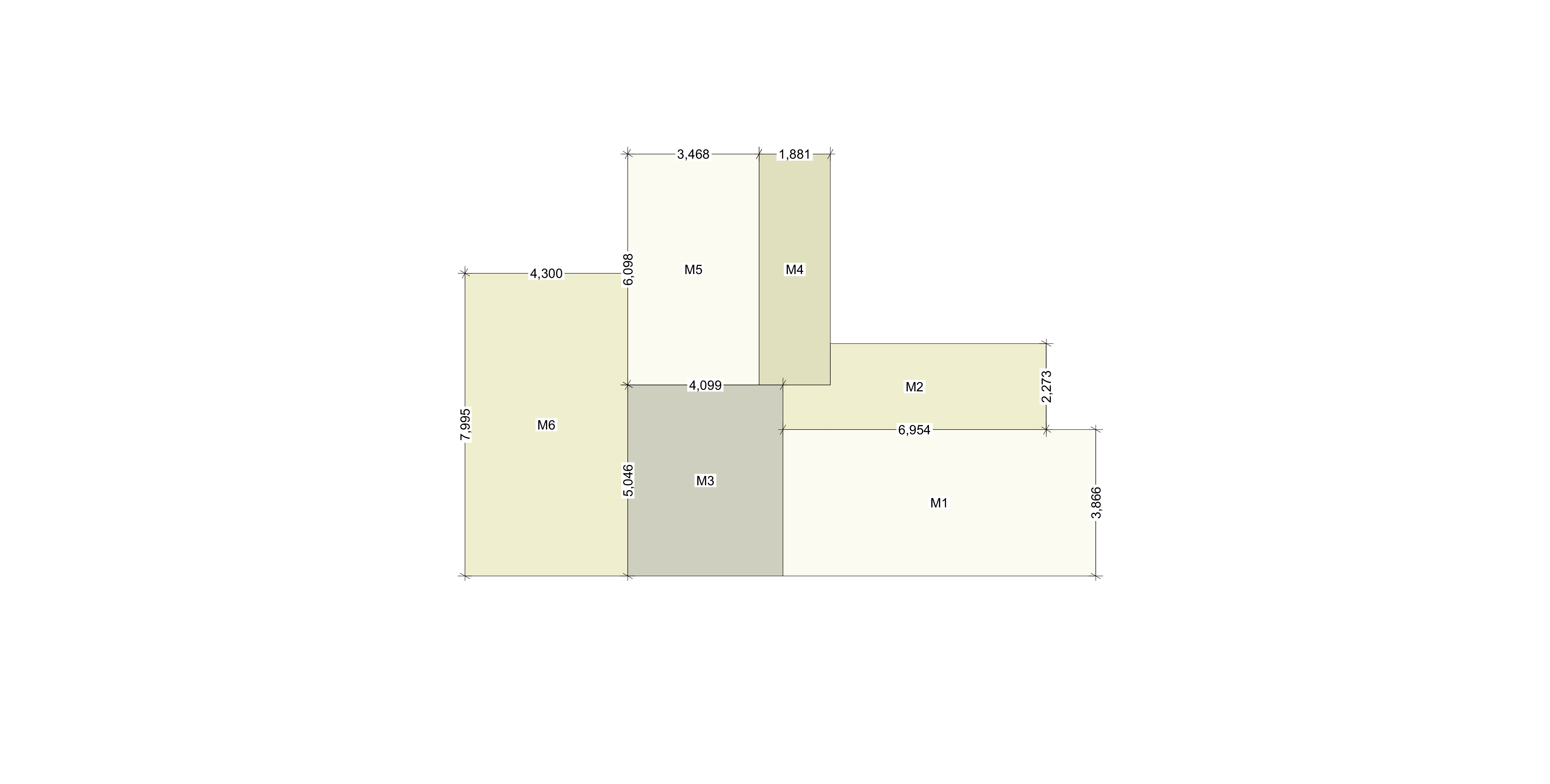
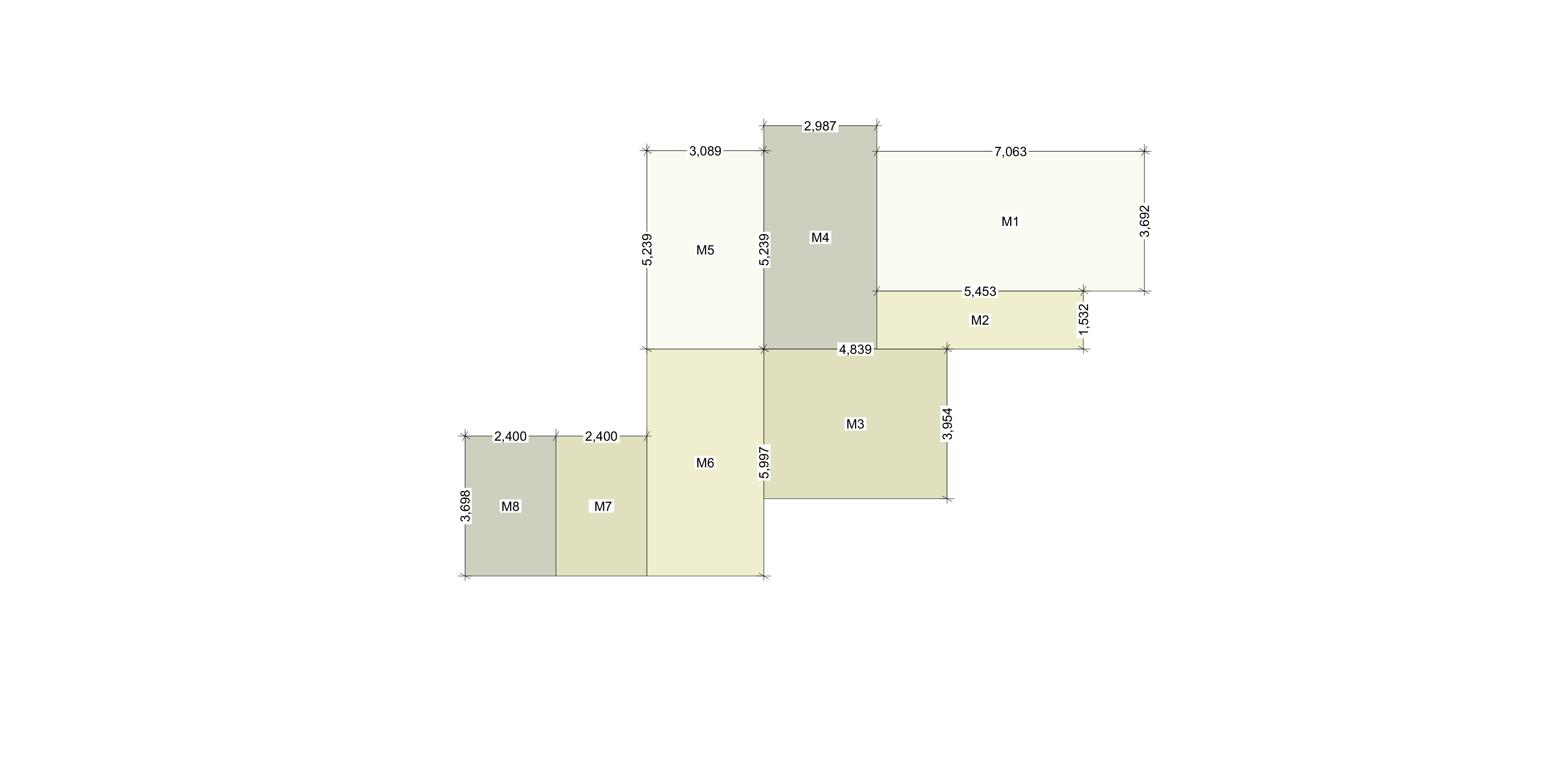
VH09 split into six volumetric modules (M1–M6). Module boundaries are introduced without altering room adjacencies, wet area locations, or the overall footprint. Setbacks respected and internal dimensions maintained where possible.
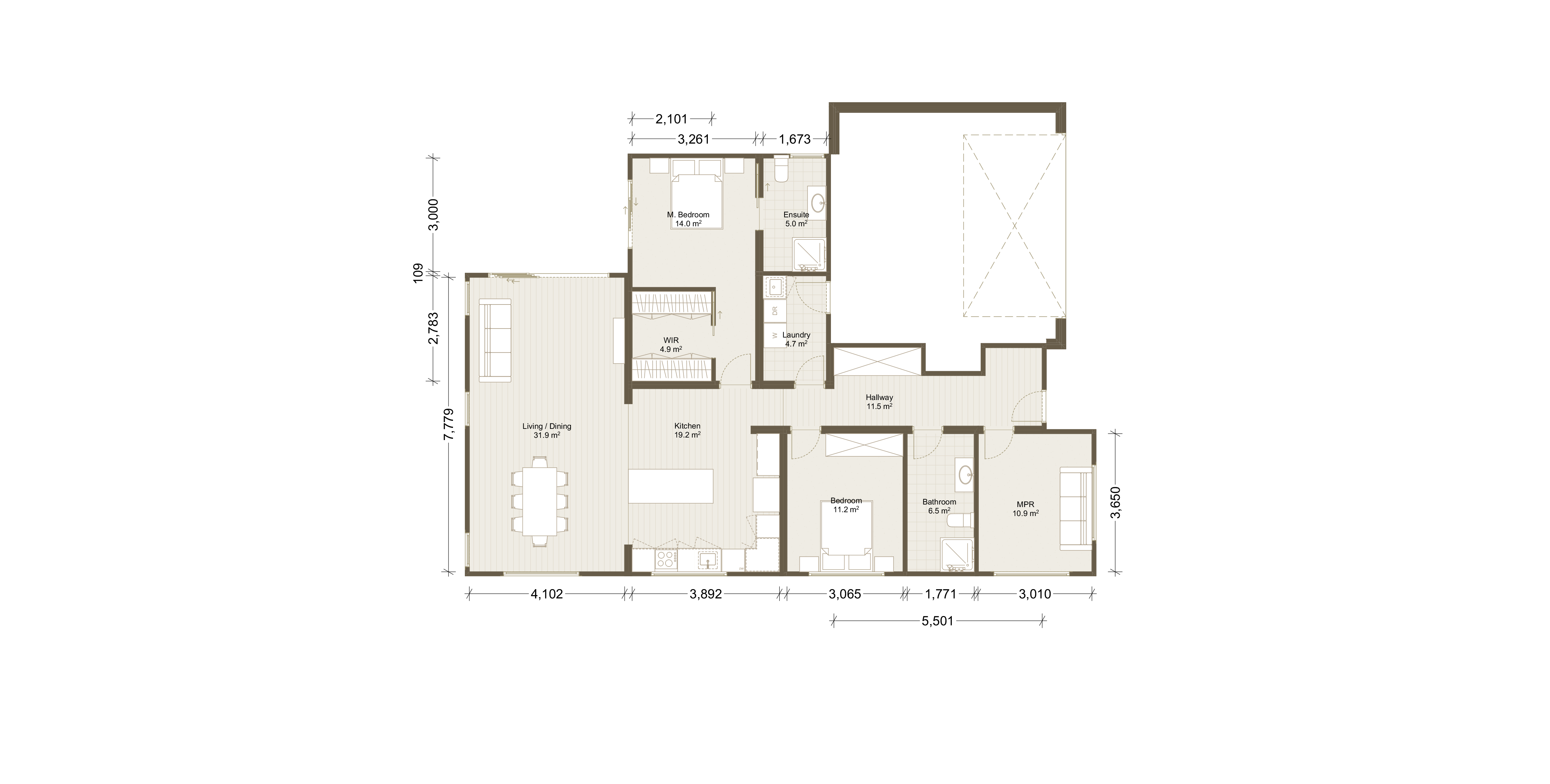
The original VH09 floor plan, shown alongside the modularisation on the previous page. Design intent has been retained throughout — internal room sizes, wet area locations, and circulation are preserved exactly as drawn.
Internal floor area: 127 m² (excluding garage).
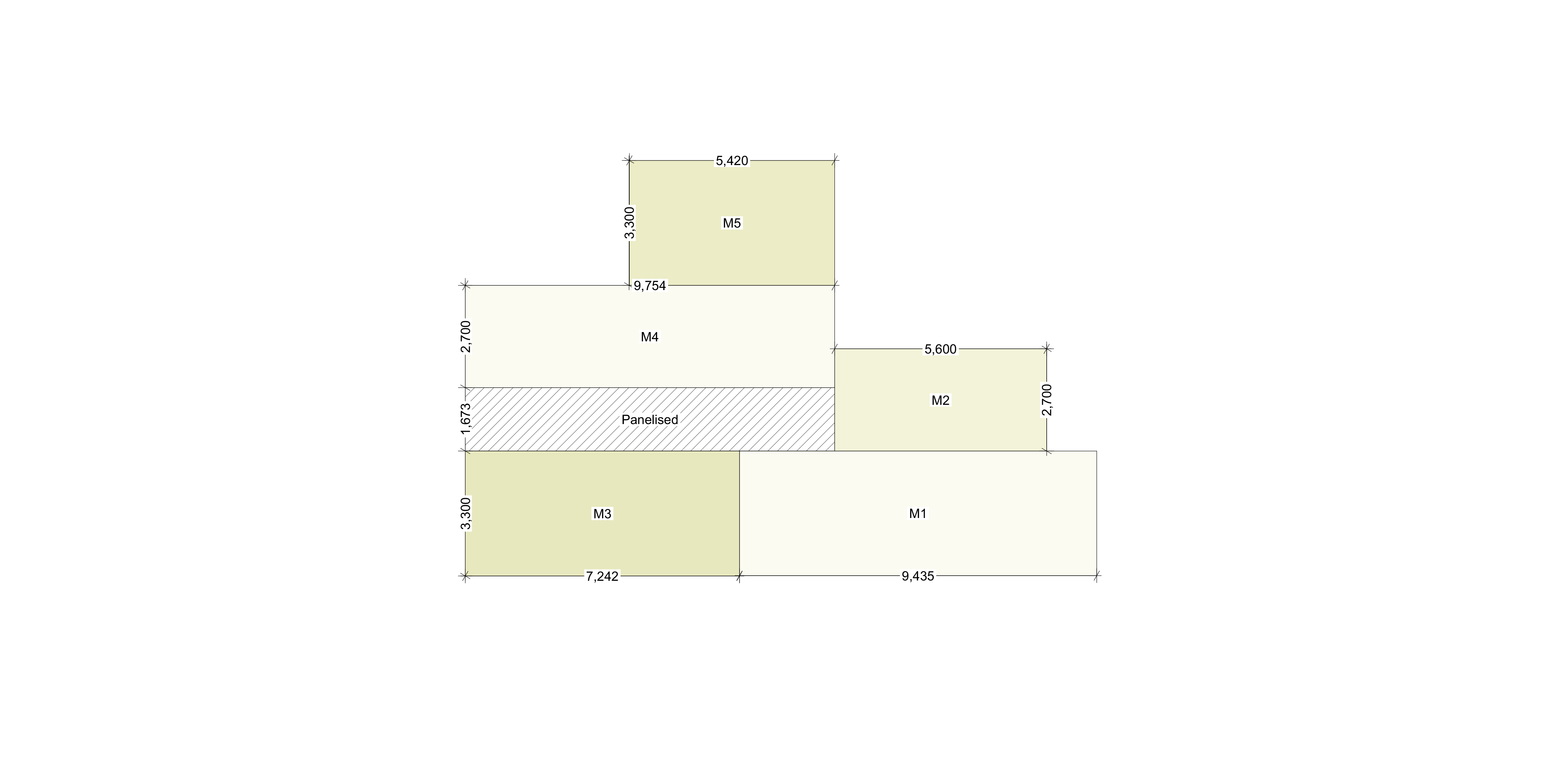
VH09 redesigned around volumetric modular logic. Same brief, same amenity — room dimensions, positions, and layouts reworked to extract maximum factory efficiency and minimise on-site time.
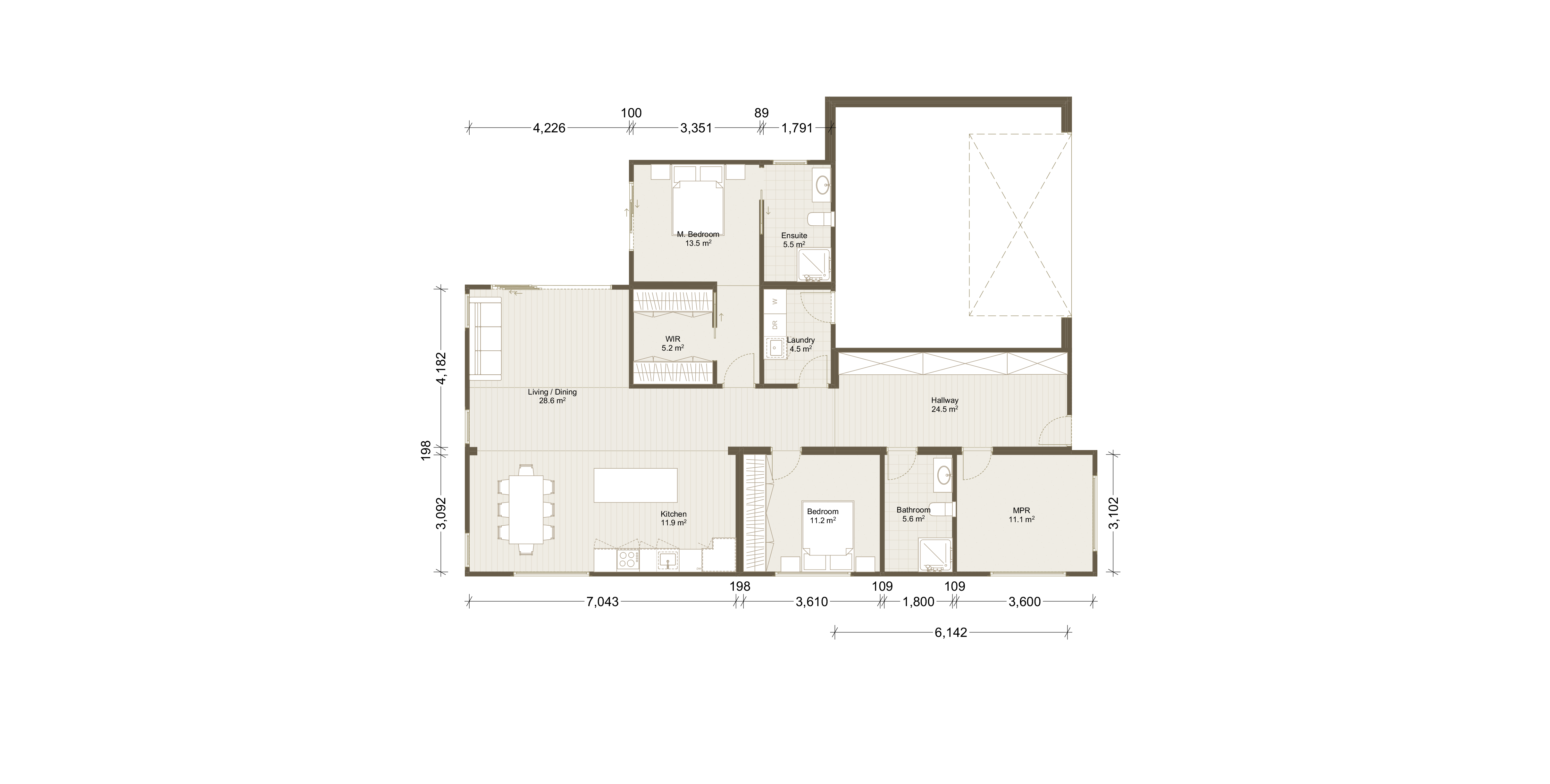
Same amenity, same room count, same Design Essentials compliance. Reworked to optimise the build process and simplify construction — architectural intent preserved throughout.
Internal floor area: 127 m² (excluding garage).
Cost neutral, time positive. Positioned to compete with traditional build costs while delivering programme certainty and reduced delivery risk.
M02 modularised as closely as possible to the original Halcyon drawings. Room adjacencies, patio and court configuration, and the Hebel column aesthetic are preserved. Setbacks respected and internal dimensions maintained where possible.
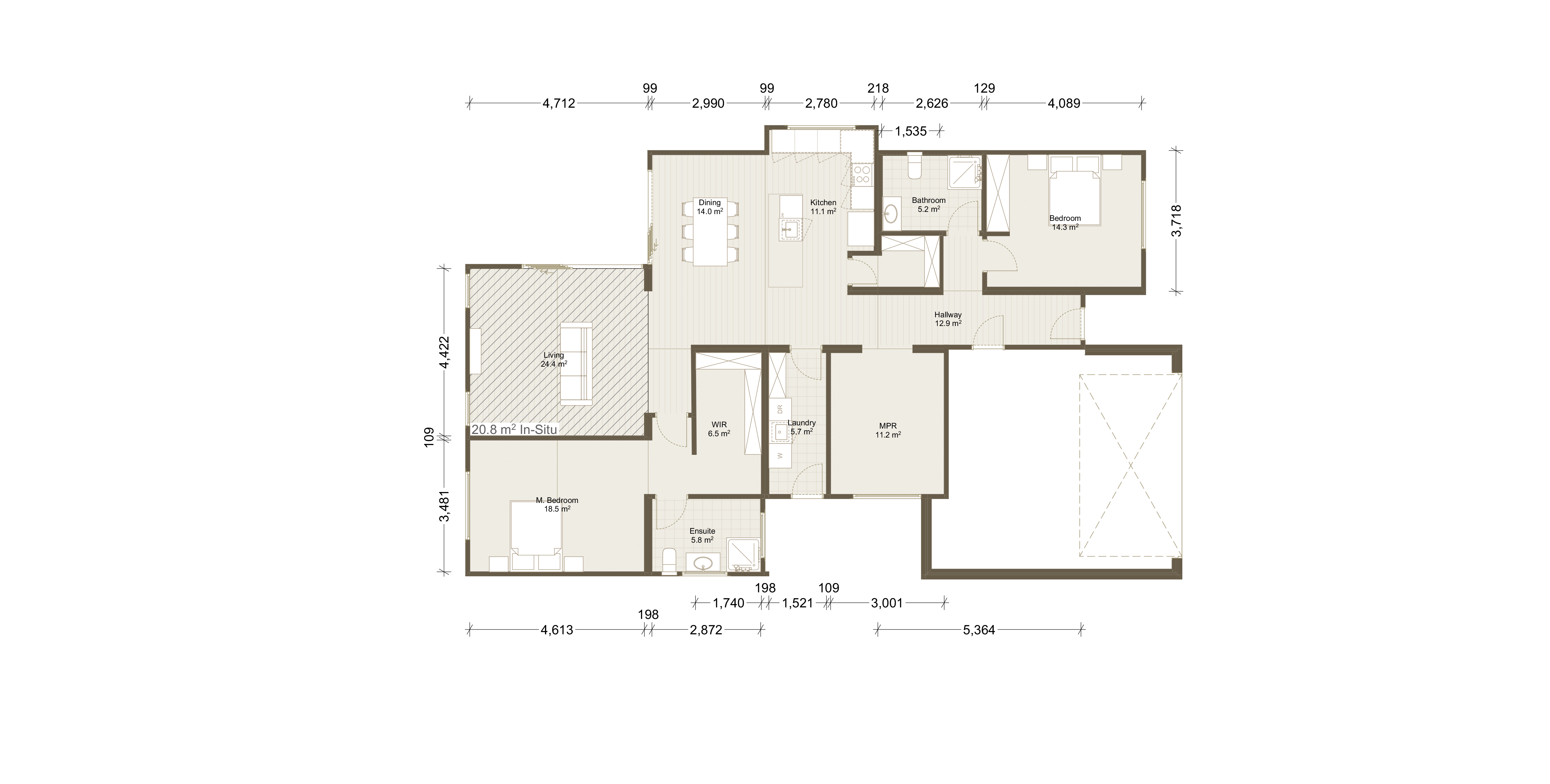
The original M02 floor plan, shown alongside the modularisation on the previous page. Design intent has been retained throughout — internal room sizes, wet area locations, and circulation are preserved. A 20.8 m² in-situ element noted on the drawings is completed on site alongside the garage and roof trusses.
Internal floor area: 140 m² (excluding garage).
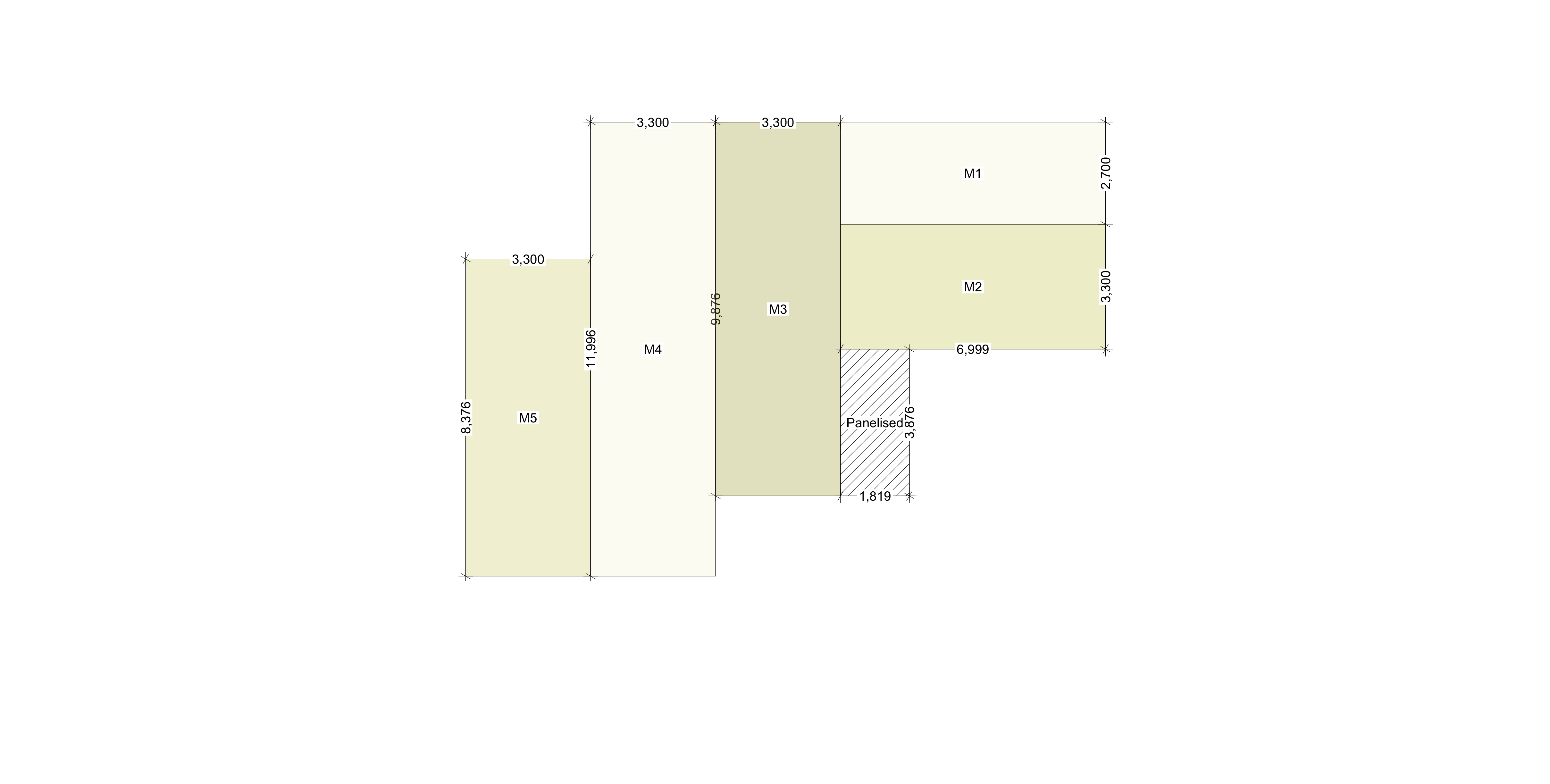
M02 redesigned around volumetric modular logic. Same brief, same amenity — room dimensions, positions, and layouts reworked to extract maximum factory efficiency and minimise on-site time.
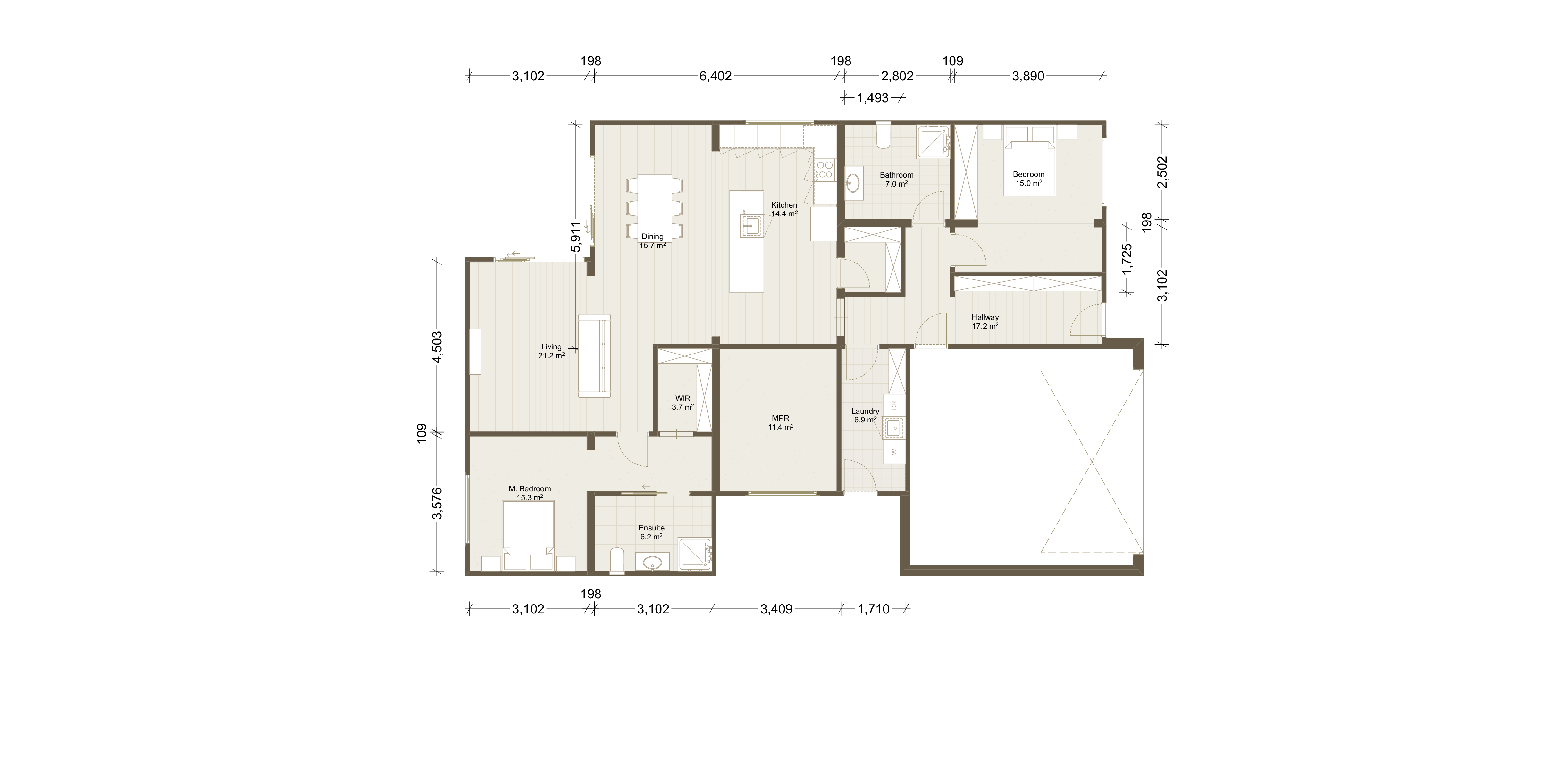
Same amenity, same room count, same Design Essentials compliance. Reworked to optimise the build process and simplify construction — architectural intent preserved throughout.
Internal floor area: 144 m² (excluding garage).
Cost neutral, time positive. Positioned to compete with traditional build costs while delivering programme certainty and reduced delivery risk.
The key mechanism is concurrency — module fabrication runs in the factory while siteworks proceed in parallel on the lot. Siteworks typically finishes first; modules then arrive and Delivery & Install completes the build. The same programme shape applies to both VH09S and M02S. Programme stability comes from the factory schedule being largely immune to weather, trade availability, and site coordination issues that introduce variability into conventional builds. The time advantage compounds across multi-lot delivery — once the production line is running, each additional dwelling reinforces the schedule rather than competing for the same trades.
End to end — from design lock through to handover — a typical VH09S or M02S build lands in under 15 weeks, with fabrication and siteworks running concurrently as shown on the programme. Factory QA before dispatch reduces defect risk at handover and shortens the post-handover punch list.
Both VH09 and M02 use Hebel Powerpanel with render finish as the primary external cladding. This is heavy, site-applied, and prone to cracking during module transport. Keep proposes equivalent systems that achieve the same visual outcome while being factory-appropriate.
Two typologies modularised, indicative pricing established, programme defined, and a delivery process compatible with the way Stockland already runs its Builder Partner network. Ready to test on a live site.
Two typologies modularised, indicative pricing on the table, and a programme that runs concurrently with siteworks. Happy to walk Stockland through the detail and scope a live pilot lot whenever it suits.